A-Level Chemistry Tutor Online
Organic mechanisms, calculations, required practicals and unfamiliar contexts — Year 12, 13 and resits. AQA, OCR, Edexcel.
- Max 8 per group
- Marked in 7 days
- Monthly mock
- AQA · OCR · Edexcel
Matched to AQA, OCR and Edexcel
Every lesson follows your child's exact specification, split across the two years.
Year 12
Building the foundationsYear 13
Mocks, UCAS & examsWhat your child actually does
Live lessons end with timed exam questions, and homework comes back marked.
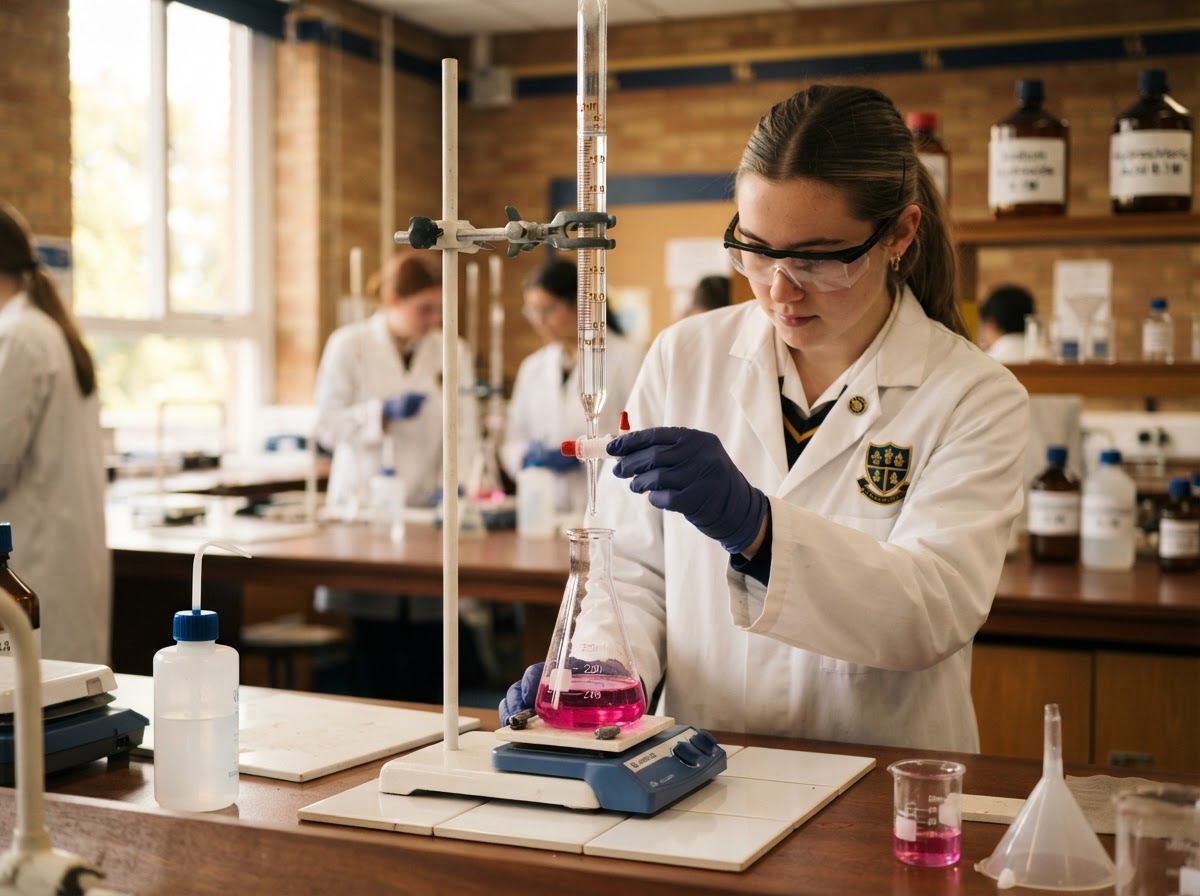
Taught by Dina, who got A* in A-Level Chemistry
Dina drills curly-arrow notation until it's automatic, and organises the many reactions into families so they stick.
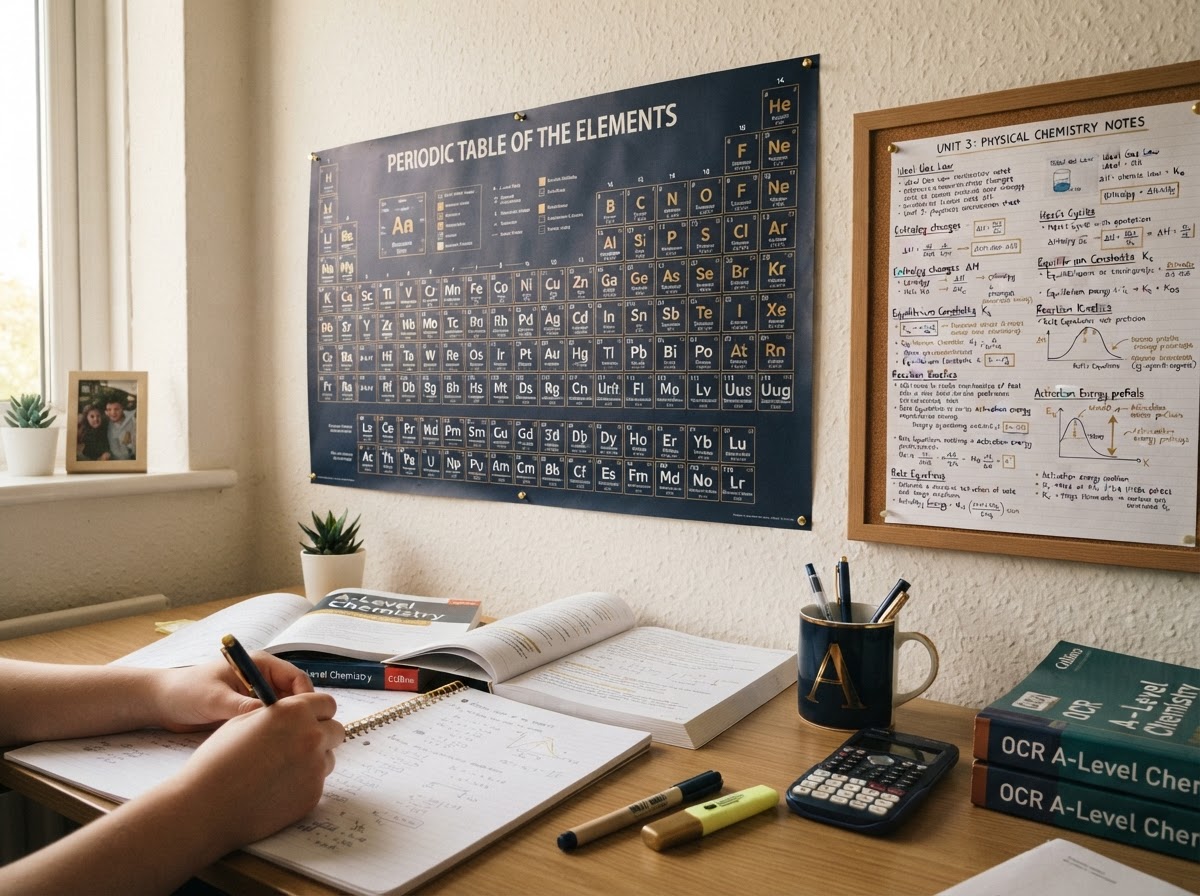
A-Level Chemistry has three distinct flavours, and students often love one and struggle with another. Dina, who achieved A* in A-Level Chemistry, teaches all three — organic, physical and inorganic — for AQA, OCR and Edexcel, matching lessons to your child's exact specification.
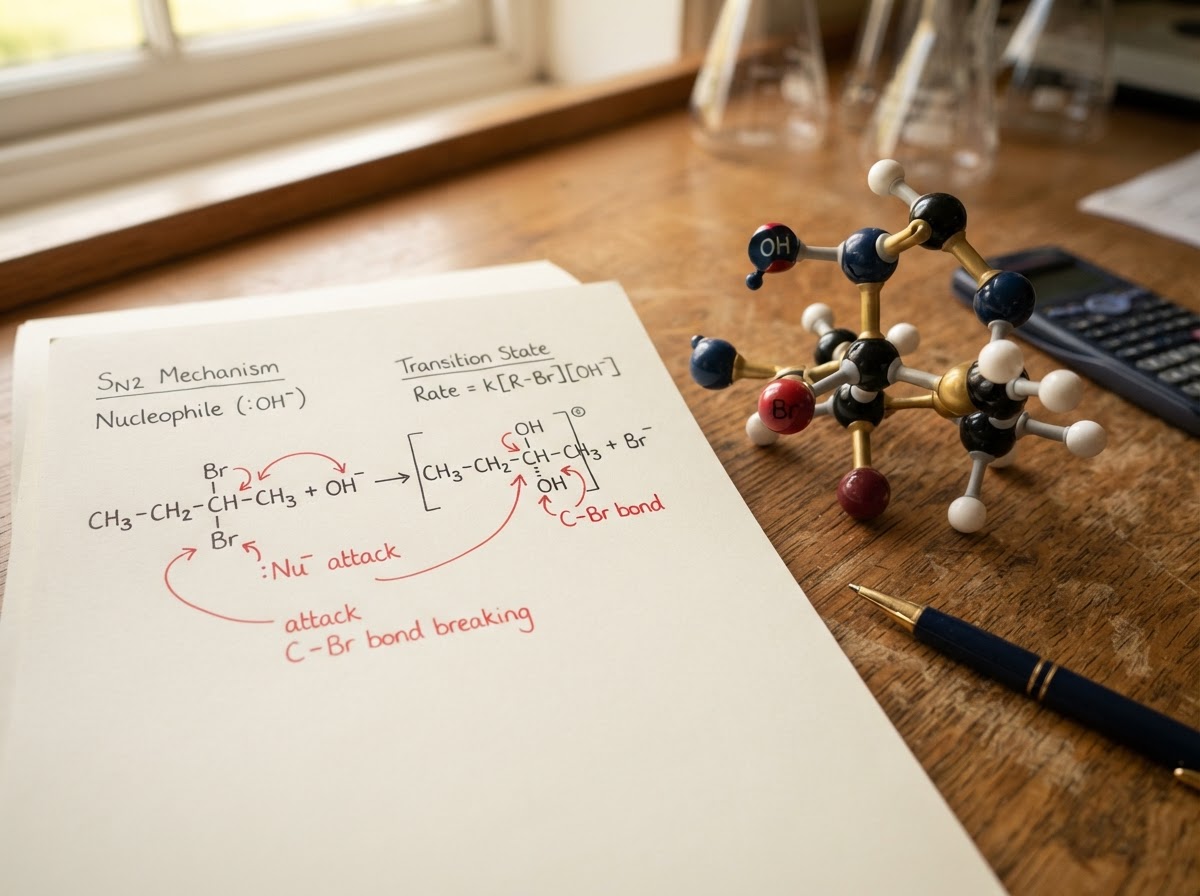
Organic Chemistry is where precise mechanisms matter most. A misplaced arrow loses the mark even when the chemistry is right. We drill mechanisms until the arrow placement is automatic, and we organise the many reactions into families so they connect and stick rather than becoming a memorisation mountain. For physical chemistry we break each calculation into a repeatable method, and for the unfamiliar-context questions we teach a step-by-step approach that turns a scary question into a familiar one.
- Qualified Teacher Status (QTS)
- PGCE
- Enhanced DBS checked
- A*A*A at A-Level
- Grade 9s at GCSE
- Neuroscience BSc, University of Birmingham
- 7+ years teaching
What a marked answer looks like
Homework is marked with written feedback within 7 days — not a tick, a clear note on the next mark.
Outline the mechanism for the reaction of bromoethane with hydroxide ions. (4 marks)
The OH⁻ ion attacks the carbon, the C–Br bond breaks and the bromide leaves. The product is ethanol.
Examiner notes
- ✓ Correctly identifies nucleophilic substitution — 1 mark.
- ✗ No curly-arrow notation shown. Draw the arrow from OH⁻ lone pair to C, and from C–Br bond to Br — 2 marks lost.
- ✗ Name the mechanism type (SN2) for the final mark.
Paper structure for AQA, OCR and Edexcel
Lessons use your child's exact board, so practice matches the real paper.
Three papers covering physical, organic and inorganic chemistry, with a dedicated practical skills section. Required practicals are examinable throughout.
Three papers: two topic-based plus a Unified Chemistry paper that tests synoptic links and unfamiliar contexts.
Three papers covering physical, organic and inorganic chemistry, plus a practical skills assessment built into the papers.
Not sure which board your child sits? Book a free assessment and we'll match the lessons to it.
A-Level Chemistry Tutor Online — parents ask
Small-group plans, qualified-teacher quality
Monthly plans, no contract — cancel anytime.
One Subject
16 hours of live lessons a month
- Max 8 students per group
- Marked homework weekly
- Monthly mock + parent report
Two Subjects
32 hours of live lessons a month · save £90
- Max 8 students per group
- Marked homework weekly
- Monthly mock + parent report
One-to-One
By arrangement
- Just your child
- Fully personalised pace
- Marked homework weekly
Mix and match any two subjects, e.g. A-Level Biology + Chemistry or GCSE Maths + Science. See full pricing.

Find out exactly where your child stands
Book a free assessment and get a short written plan showing strengths, gaps and next steps. No obligation, no contract.